
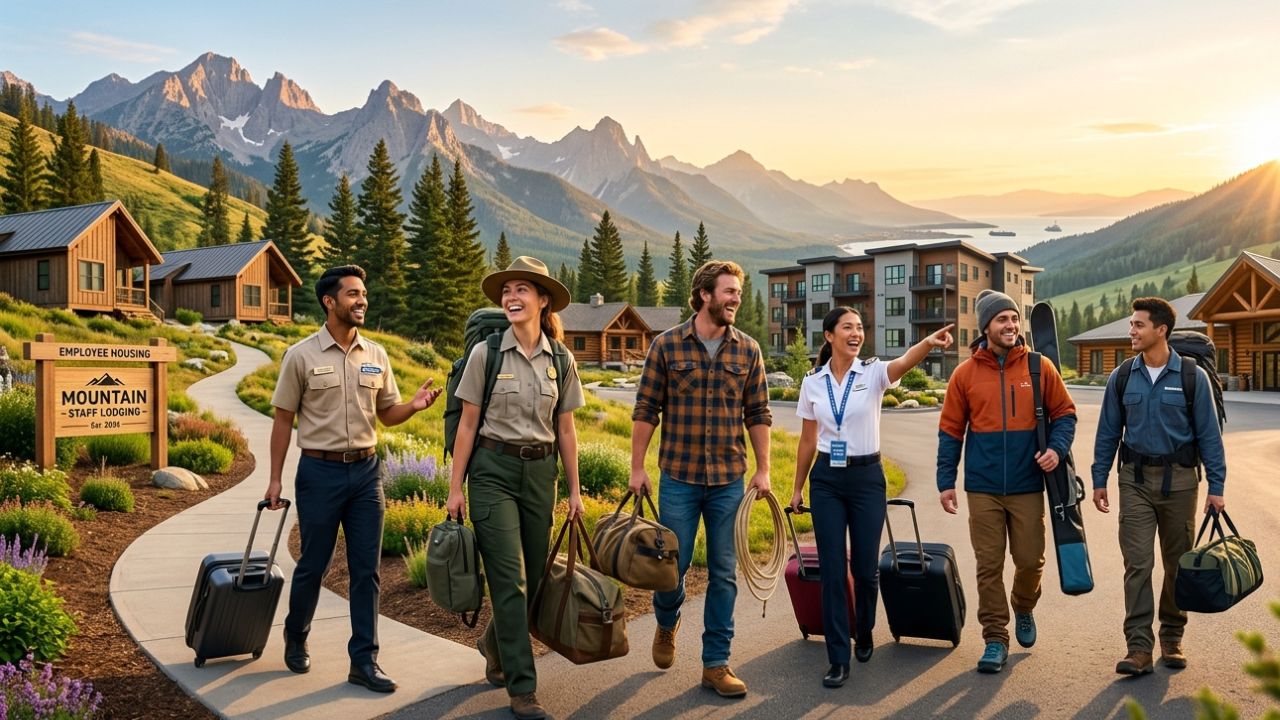
You don't have to wait to get your big break, move across the country, and start earning money. There are plenty of jobs, some very common, that will relocate and house you without any experience. These jobs are available to those who just need an opportunity to start somewhere new and make a living. Below, we'll go over what these jobs are, how to find them, and what to expect.
What Exactly Does "Relocation + Housing Included" Mean?
Before you keep reading, let's define what it means when "relocation and housing are included" in a job offer
Most employers that do this fall under the category of seasonal work
What this usually means is:
- Moving expenses are paid for, either as a cash reimbursement or an allowance towards your transportation costs
- On-site staff housing, which can range from a private room to a dorm bed, staff cabins, or even tent camping at a ranch
- Meals, especially at a ranch, resort, or camp
- Utilities, depending on the employer
Not every employer will include all of these, and some may throw in additional perks. Be sure to ask about what's covered and what costs you may be responsible for when you apply. If you're using VagaJobs, remember that employers must clearly list what housing stipends, allowances, or reimbursements are included in the job to be posted.
8 Different Jobs That Include Relocation + Housing (No Experience Necessary)
1. Resort, Hotel, and General Hospitality Jobs
Resorts are a common place to start for those looking to get paid to relocate and be housed, especially in beautiful areas like Idaho, Vermont, Alaska, and Colorado. These employers tend to hire year-round, and seasonal jobs at resorts and hotels offer the chance to live and work in amazing locations. Most front desk, cleaning, food service, and maintenance jobs at resorts only require previous hospitality experience
What makes these jobs great for someone seeking to relocate:
- Most have staff housing available
- Meals are often provided on-site
- Most are seasonal, and some employers even allow you to go elsewhere for the winter if you'd like
- Many hire for both summer and winter seasons, and have permanent jobs as well
Hotels like the Shore Lodge Whitetail Club in Idaho and the Harbor 360 Hotel in Alaska are great examples of employers that hire seasonal staff and offer housing.
2. Guest Ranch, Guest Farm, and Horseback Riding Jobs
Guest ranches are another popular type of seasonal job to look into, especially if you're interested in working outdoors. They tend to require a lot of staff during the summer and the ranches are usually located in some of the most beautiful parts of the country. Guest ranch jobs can be as simple as working as a wrangler, ranch hand, or even general labor, and don't always require previous experience.
What to expect from these jobs:
- Housing and meals are usually provided
- Most are outdoors and physical labor
- Most do not require previous experience - they'll train you
If you are looking for a seasonal, outdoor job, a ranch could be the perfect spot. Bitterroot Ranch in Wyoming is a great example of a guest ranch that provides housing to its seasonal staff and is located near the Shoshone National Forest.
3. National Park and Conservation Jobs
National Park jobs are another fantastic option for those looking to relocate and be housed at their place of employment. Many of these jobs offer heavily subsidized or even completely free housing at beautiful job sites.
What to expect from these jobs:
- Trail, campground, and visitor jobs that only require seasonal or even volunteer experience
- Work in a beautiful location with other like-minded people
- Subsidized or free housing
- Conservation and environmental jobs of different types and levels of experience
Housing is almost always provided at national park jobs, especially for entry-level positions. Organizations like A Christian Ministry in the National Parks will hire for many different types of jobs located in different national parks. VagaJobs even has a National Park Jobs category that lists jobs in places like Yellowstone and Yosemite.
4. Summer Camp Jobs
Summer camps are an incredibly popular and competitive source of seasonal employment in the United States and Canada. Most camps operate from around May through August, and require hundreds of counselors, staff, and seasonal workers each year. Positions are wide ranging, from health aides to maintenance, and most camps provide on-site housing and food as a benefit of employment.
Why these jobs are perfect for you:
- Live at the camp and avoid the expense of commuting
- Most camps only require entry-level experience
- Great way to develop people and leadership skills
- Typically only a 2-3 month commitment
Summer camp jobs aren't just for counselors - there are plenty of non-counseling jobs available for those who love the outdoors and working with kids of all ages.
5. Ski Resort Jobs (Winter Seasonal)
If you love the outdoors and snow, ski resort jobs are a fantastic option for you. Most of these employers will provide housing, ski passes, and other benefits for those who apply early enough. Many ski resort jobs require little to no experience at all, and are a fantastic way to get paid to travel and work in some of the most beautiful places in the country.
What to expect from these jobs:
- Lodging, lift tickets, and other discounts
- Entry-level and seasonal experience acceptable
- Winter jobs at a ski resort are a fantastic way to earn money and enjoy the outdoors
Dodge Ridge Mountain Resort in California is one great example of a ski resort hiring on VagaJobs, but most ski resorts provide comparable benefits for their seasonal employees. Apply early for the winter season, as most resorts begin hiring in September or October for the December opening.
6. Restaurant, Bar, and Server Jobs at Remote Destinations
Restaurants and bars at remote or popular destinations often have to hire seasonal staff, as they can't find employees locally.
What to expect from these jobs:
- Entry-level and seasonal experience acceptable
- Food and/or lodging
- Tips in high-traffic areas or among wealthy locals
- Working in unique locations
Restaurants such as Omakase in Vermont and Denali Brewing Company in Alaska are great examples of seasonal employers looking to fill food service jobs and provide housing to their staff. Many bars and restaurants are seasonal as well, and can offer their employees a unique work environment while being relocated nearby.
7. Travel Healthcare and Caregiving Jobs (Entry-Level)
If you're open to receiving some training, healthcare jobs are a fantastic source of employment for those seeking to be relocated and have your housing provided for. Many entry-level healthcare jobs such as home health aide, caregiver, and patient support specialist require little to no experience and pay for at least some of your relocation. Most also provide housing stipends or allowances. This can include a wide variety of entry-level healthcare jobs.
What to expect from these jobs:
- Some short-term or paid training
- Weekly pay and housing stipend
- Flexible work environment across the country
Travel healthcare jobs are a fantastic source of steady entry-level experience. While they don't tend to be as short-term as seasonal jobs, they usually have much more stability. Many healthcare employers even allow you to choose where you'd like to work.
8. Hospitality Internships, Programs, and Experiences
Employers such as YMCA of the Rockies in Colorado offer many different types of jobs at their programs, including resort, camp, and outdoor stewardship jobs. Most of these jobs provide on-site housing and are specifically for those seeking entry-level experience. Similar jobs can be found at other YMCA locations, conference centers, such as the Stanford Sierra Conference Center near Lake Tahoe, as well as eco-lodge and ministry employers.
How to Actually Find These Jobs
Now that we've gone over what jobs you can expect to find, here are some tips for finding them:
Use VagaJobs - we specialize in seasonal jobs that provide housing, and have a search function to sort through the hundreds of jobs on the site by season, location, and other factors. Employers list what they provide in their job description, so you're not left wondering whether housing is actually included when you apply. See all jobs with housing here.
Apply early.
For most summer jobs, this means applying somewhere between January and March, and for most winter jobs, this means applying between September and October. Jobs in popular areas tend to fill up quickly, so be sure to set up job alerts with VagaJobs so that you can apply as soon as a job is posted.
Check the job description.
While you may be excited to see a job post that fits your experience, always check the fine print. What does the employer provide? What will you be responsible for? What kind of housing is available?
Don't overthink it.
Most entry-level jobs don't require a fancy résumé or extensive application. VagaJobs posts for entry-level jobs tend to be much simpler, and most just ask for your availability and experience.
What You Should Ask About Before You Accept
Now that you know more about the types of jobs available to you, here are some questions to ask the employer before you accept:
- Is the housing provided on-site or do I have to find my own with a stipend?
- How much is the stipend if I have to find my own housing, or what are the costs subtracted from my pay if I'm provided housing?
- Are meals provided?
- Is there a contract or a minimum time I have to work?
- What happens if I have to leave earlier than agreed?
- Does the employer pay for my move both ways, or do I have to pay for it myself?
These are just some of the many questions to ask before you commit to a job. Asking them beforehand can save you a lot of grief later on.
One Final Note Before You Go
It's important to remember that while these jobs can be fantastic opportunities to gain entry-level experience, learn new skills, and earn good money, they do have downsides. Working on-site with others means sacrificing privacy, and seasonal jobs only last for a small part of the year. Jobs in remote areas may not have the same access to things like public transportation or popular destinations. And just like with any job, the opportunities and benefits can vary drastically from employer to employer
Despite these downsides, many people take these jobs as an opportunity to travel, pay off debts, retire early, or even explore new careers. As one VagaJobs worker put it, "Seasonal work showed me that you don't have to be rich to travel - just brave and willing to try something new."
If you're looking for a chance to start fresh somewhere new and different, with little to no financial investment on your end, these jobs can be a fantastic opportunity. In fact, many people who have taken seasonal jobs with housing stipends or allowances have been able to live a lifestyle they wouldn't have been able to afford otherwise. With VagaJobs, you can find many different jobs that will help you meet your goals of traveling and working in beautiful places all over the country, or even the world.
Get Started Today!
Using VagaJobs, you can find a wide variety of seasonal jobs that include or subsidize housing. Simply create an account to start browsing, setting job alerts, and applying to jobs today!
See all seasonal jobs with housing
Jobs at a ranch or in the outdoors
F.A.Q
1. Are there actual jobs for people with zero experience that will pay to relocate you and house you?
Yes, there are! What qualifies as "zero experience," however, may depend on the job you're looking for. Most employers looking to hire entry-level workers will only ask for general work ethic and availability, rather than specific experience. The best way to maximize your opportunities while minimizing the requirements is to clearly state your qualifications in your job application, and only apply to jobs that you actually qualify for, experience-wise. It's always good to be honest with yourself and the employer, because they'll know if you lie or stretch the truth. It all comes down to being upfront about where you're at while putting yourself out there for opportunities.
2. What kind of housing do these types of employers usually offer?
It can vary a lot depending on the employer and the location, but some of the most common types of housing available to workers in these industries are:
• Private rooms in a building with other staff
• Dormitory-style beds with other staff
• Cabins or rooms within the main building
• RV or Camper hook-ups at some national parks, guest ranches, or camps
• Stipend for you to find your own place nearby
Always be sure to ask the employer about the type and conditions of the housing before committing to the job. With VagaJobs, employers are required to disclose what type of housing is offered in the job description so you can compare different employers' offers.
3. How long do these jobs usually last?
Most seasonal jobs tend to last between 2 and 6 months. For example, most summer resort jobs start in May and finish in September, and most ski resort jobs start in December and finish in March or April, depending on the area. There are also some employers that hire year-round, or for back-to-back seasons, so you can ask the employer if they offer multiple seasons of work. Many people take advantage of the long work seasons to travel while they're not working, or to work at multiple different job sites.
4. Are there any catches or scams with these type of jobs?
Unfortunately, yes, there can be. Some employers will try to get you to commit to working for them for a certain amount of time, or pay for your relocation, and then expect you to pay them back if you leave early. Other employers may withhold money from your paycheck to pay for your housing or other expenses, and may overcharge you for things like utilities or food. It's important to ask the employer about what expenses you'll be responsible for and whether or not you'll get reimbursed. Housing can vary widely, both in conditions and in cost, so it's important to ask the employer about their specific stipend, if any, or deductions, if any, from your paycheck that go towards housing and other expenses. Some employers will allow you to find your own housing nearby, and usually provide a stipend to help you pay for it.
With VagaJobs, you can always trust that the job descriptions for employers offering housing will state what expenses you should expect to pay for and what, if any, deductions will come out of your paycheck towards those expenses.
5. When should I start applying for jobs with relocation and/or housing benefits?
As early as you possibly can. Most employers start hiring several months in advance of the season they need you for. This means different things for different jobs, but for the most part, it means applying for summer jobs somewhere between January and March, and for winter jobs somewhere between September and October.
Year-round employers may have more flexibility, but it's always good to err on the earlier side when you're applying, simply because it takes time to process your application. The more competitive the job and the more desirable the location are, the earlier you should apply.
To help you out, we recommend you set up job alerts on VagaJobs so that you can see any new jobs with housing as they're posted.